Why old photos turn orange, and whether it can be reversed
That orange cast is not dirt and it is not fading light. It is one dye layer outliving the others, which explains why the damage looks the way it does and what can honestly be recovered.
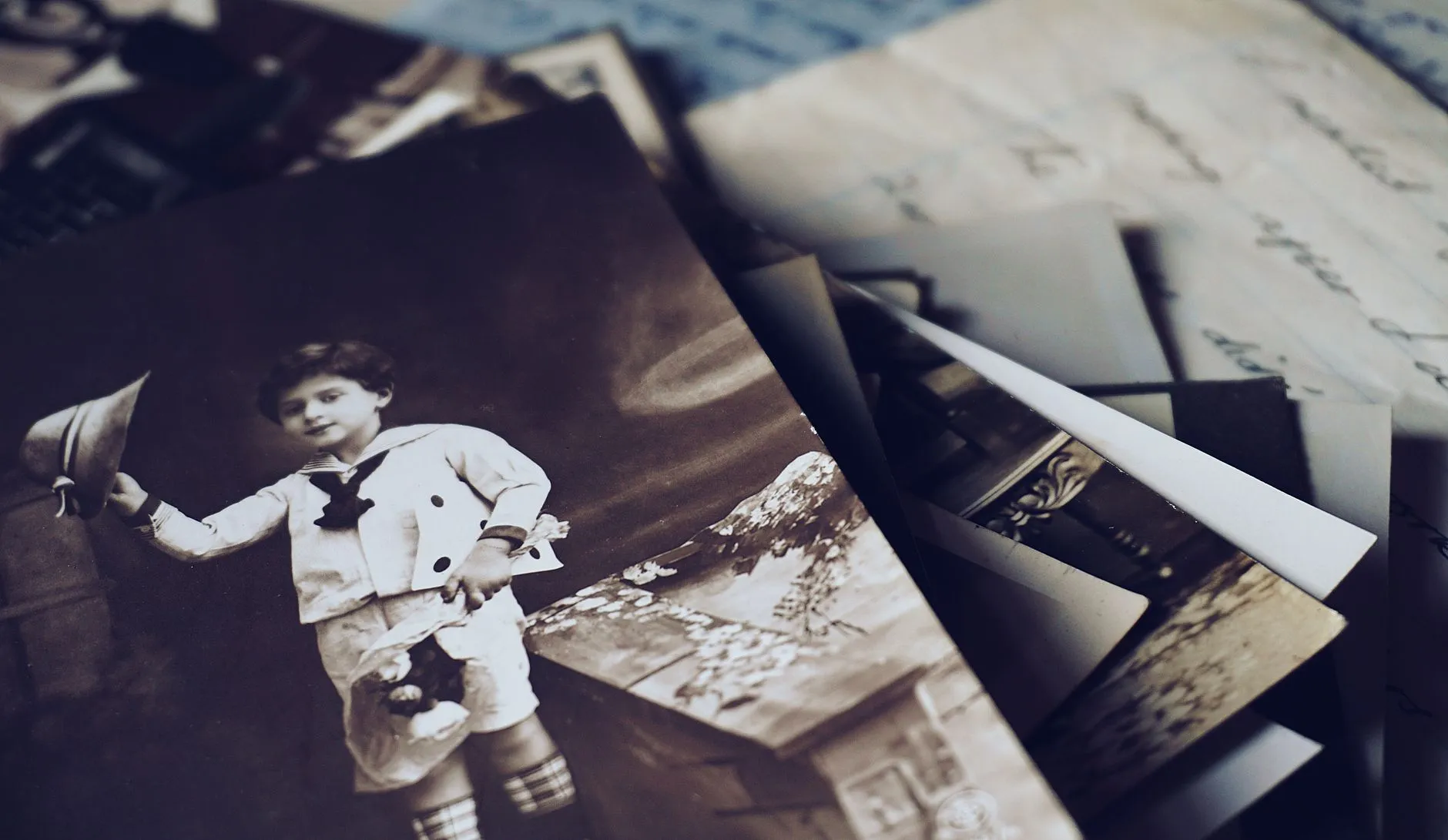
Almost every family has them. A stack of snapshots from the seventies or eighties where everyone has turned a uniform shade of tangerine, as though the whole decade happened at sunset.
It is not dirt, it is not dust, and it is not the paper yellowing. It is chemistry, and understanding it tells you exactly what can and cannot be recovered.
Three dyes, one of which gives up first
A colour print does not contain colour photographs the way you might imagine. It contains three separate dye layers, cyan, magenta and yellow, stacked on top of each other. Their overlap produces every colour you see.
Those three dyes do not age at the same rate.
- Cyan is the least stable. It goes first, sometimes within a couple of decades.
- Magenta follows, more slowly.
- Yellow is the most durable and usually survives the longest.
Now take an image and remove most of its cyan and some of its magenta. You have stripped out the blues and greens and left the yellows and reds standing. The result reads as orange. That is the whole explanation, and it is why the shift is so consistent across photographs from the same era: they were all made the same way.
Prints from cheap high street processing in the 1970s and 1980s are the worst affected, because the dyes used were never intended to last generations. Nobody in 1979 was thinking about 2026.
Why some photographs shrug it off
You will notice the effect is wildly uneven across a collection.
True black and white prints are extraordinarily stable. A properly processed and washed silver gelatin print from 1935 can look essentially as it did when it was made. There are no dyes to fade, only metallic silver, which is far more durable.
Kodachrome slides are famously stable, with dark storage life measured in many decades. If you find a box of Kodachrome in a cupboard you are usually in luck.
Chromogenic colour prints and Ektachrome are where the trouble lives.
Storage explains most of the rest. Heat and humidity accelerate dye loss dramatically, and light does too. This is why photographs stored in a cool dark wardrobe often look better than their siblings that lived in a garage, an attic or a frame on a sunny wall. Those three places are the worst in any house.
What can honestly be recovered
Here is the distinction that matters, and most software marketing blurs it deliberately.
On the print itself, nothing can be done. The cyan dye has chemically decomposed. It does not exist any more. No treatment, no chemical bath and no amount of careful storage will bring it back. Anyone claiming otherwise about a faded print is mistaken.
On a scan of the print, a great deal can be done, and often surprisingly well. The surviving dye layers still hold the tonal structure of the original scene. All the information about who was standing where, and what was light and what was dark, is largely intact. What has been lost is the balance between channels. Correcting that is precisely what colour correction does.
In practice, a badly orange snapshot frequently recovers to something genuinely convincing, because the underlying image was never lost, only unbalanced. Skin tones come back. Skies come back. What suffers is fine colour distinction in areas where the cyan record has gone completely, and those regions become an educated guess rather than a recovery.
Scan before you correct, and keep the uncorrected scan forever. Colour correction involves judgement, and in ten years both the tools and your taste will be different.
The practical order of work
- Scan at 600 DPI or higher, in colour, saved as TIFF. See what DPI to scan old photos at.
- Correct the white balance and the individual channels, rather than reaching for a saturation slider. The problem is a missing channel, not weak colour, and boosting saturation on an orange image simply gives you a more emphatic orange.
- Judge skin tones last. They are the thing a viewer notices, and getting them plausible matters more than technical neutrality.
- Keep the original print. Store it cool, dark and dry, and it will decline far more slowly from here.
Stopping it getting worse
You cannot reverse dye loss but you can slow it considerably. Cool, dark, dry, and away from PVC and cheap adhesives. Our guide on storing old photographs covers what actually matters and what is marketing.
And digitise sooner rather than later. Every year of delay is a little more cyan gone, and the scan you take today will always be better than the scan you take in 2036.
Common questions
- Why do old colour photos go orange or red?
- Colour prints from roughly the 1950s to the 1990s build their image from three dye layers, cyan, magenta and yellow. The cyan dye is the least stable and fades first, followed by magenta. Yellow survives longest. Remove blue and green from an image and what remains reads as orange or red, which is exactly what you are looking at.
- Can the orange cast be fixed?
- Digitally, usually yes, and often very well, because the surviving dye layers still hold the tonal structure of the original scene. Physically on the print itself, no. The dye is chemically gone and nothing puts it back. So the honest fix is to scan the print and correct the scan.
- Why do some old photos survive better than others?
- Process and storage. Kodachrome slides and true black and white prints are remarkably stable and can look almost new after fifty years. Chromogenic colour prints from cheap 1970s and 1980s processing were never designed to last, and heat, humidity and daylight accelerate the loss dramatically.
- Does storing photos in the dark stop it?
- It slows it substantially but does not stop it. Dye fading is a chemical process that continues in the dark, driven by heat and humidity. Cool, dry and dark is the goal, which is why an attic or a garage is the worst place in a house for photographs.