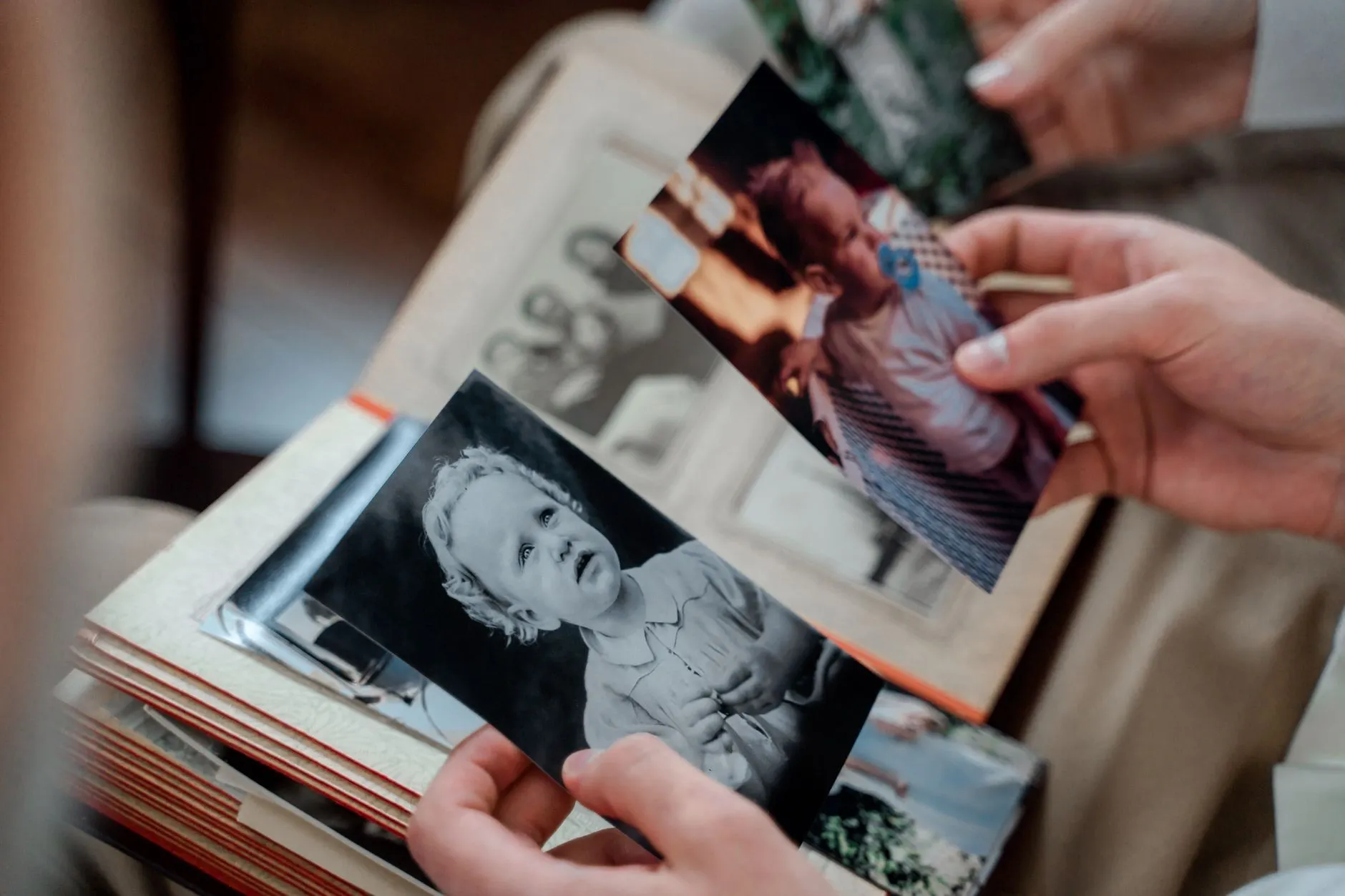
Can grimy old photos be cleaned digitally?
How to clean dirt and grime off old photos
A century of hands, drawers and dust settles into the surface of a photograph. The safe cleaning happens after scanning, not before.




What this damage is
Grime on photos is cumulative and gentle: skin oils from every hand that held it, airborne dust that settled and stuck, soot if a house had fires, all bedding into the surface with fine abrasion from every drawer it slid around in.
The result is a grey veil with speckling, like both portraits below. Nothing is missing; the picture is just buried.
Can it be fixed?
Physical cleaning should stop at a soft dry brush for loose dust. Anything wet, and anything that rubs, trades surface dirt for permanent abrasion. Scan the photo as it is; grime scans fine. Digital restoration then removes the veil, the speckling and the fine scratch haze in one pass, as both examples show. The originals stayed exactly as they were, which is the point.
Before any repair, get a proper scan: the DPI advisor gives the right setting in two questions, and the scanning guide covers the craft.
Common questions
- Is it safe to clean an old photo with a damp cloth?
- No. Water swells the image layer, and rubbing while it is soft leaves permanent marks. A soft dry brush for loose dust is the sensible limit before scanning.
- Should I clean a photo before or after scanning?
- Brush off loose dust, then scan. Everything else is safer to remove digitally, where a mistake costs an undo instead of the photograph.
- Why do my scans look dirtier than the photo?
- Scanners see evenly and mercilessly; the eye forgives grime that a 600 DPI scan records in full. That detail is useful: the restoration model uses it to separate dirt from picture.
The damage is the before. You hold the after.
Real repairs on real photographs, made by the model inside Photo Restore. Your family's copies deserve the same rescue.